
Building your first TT-02 Kit? This comprehensive guide details all the essential tools you need for a truly flawless and enjoyable RC car assembly experience.
Need Help?
If you have a question about this post or anything else on the site, leave a comment on any of my YouTube videos. I’m much more likely to see it there and get back to you. RCGuided-YouTube
This site contains affiliate links. When you click these links, you help the site grow. The site may receive a commission at no additional cost to you. As an Amazon Associate I earn from qualifying purchases and as an eBay Partner, I may be compensated if you make a purchase.
A Quick Guide of Tools used
Ready to turn your Tamiya TT-02 rally dreams into reality? Start your journey the right way—with the right tools. Skip the guesswork and frustration:
Core Assembly Tools
- JIS Screwdriver
Absolutely essential for Tamiya screws. Don’t risk stripping them with Phillips drivers—JIS is engineered for the job.- Vessel Interchangeable Screwdriver 220w3j1: The one I use and well made.
- 1/4″ Ratcheting Screwdriver + Vessel Torsion Bit: a faster option to the one above.
- Tamiya 300074085 RC Tool Kit: Official, purpose-built by Tamiya, made for your TT-02.
- Hex Drivers
On the stock kit, only your pinion gear is hex, but upgraded models and parts will require these. Future-proof your kit!- MIP Metric Speed Tip: The best Money can buy.
- ProTek “TruTorque” Power Drill Tip: A good value for what you get.
- “Max Value” Starter Kit: Traxxas Tool Kit or EcoPower Tool Kit, then upgrade to ProTek TruTorque or MIP Speed Tip once you get the money. Note: This might be the best setup on the list.
- Tip: “Don’t get stuck with stubby, soft metal tools from a cheap kit. Invest a little for mileage and happiness.”
- Secret Weapon: Fingernail clippers! Trust me, these pop parts off sprues cleanly—and you’ll use them more than you think.
- Tire Glue (CA):
Trusted brands (Pro-Line, JConcepts, AKA, ProTek) If you tire falls off it’s probably something you did.
Oils & Fasteners
- Moving Parts Lubricant:
WD-40 Specialist Silicone Lubricant (might not be the best), but it’s a safe lubricant to use on all moving parts of an RC car. - Grease:
Super Lube Synthetic Multi-Purpose— good for higher loads like bevel and ring gears. - Shock & Bearing Oils:
Losi or Associated for shock oil; Liberty Oil for bearings. These keep things running fast, quiet, and smooth. - Hook and Loop Adhesive (AKA VELCRO): My preferred choice for it allows the freedom to move components around more easily on the chassis and/or from car to car (like ESC, receivers). But Double-Sided Tape is a better, more permanent solution.
- Blue/Low Strength Threadlock:
you can skip this for the stock kit, but screws in matel like to back out!
Smart Build & Finishing Tools
- Magnetic Part Trays:
Skip the “where did that screw go?” panic. - Soldering Iron: Essential for fixing or upgrading electronic components.
- Weller or Hakko 40-watt or higher: Both have been around and known to work well.
- PINECIL – Smart Mini Portable Iron: If needed, can run on a battery and get the job done without an outlet
- Use 63/37 Rosin Core Solder, the easiest to work with.
- Digital Calipers: Help with getting precise measurements when setting up your car.
- RC Lexan (Polycarbonate) Paint: Crucial for body finishing. This specialized paint is for clear, flexible RC bodies. Many kits don’t come pre-painted. TAMIYA Polycarbonate spray paint is one of the best if you don’t have an airbrush.
- Masking Tape for Painting: Essential for custom paint jobs. Use high-quality masking tape for sharp lines and detailed designs.
- Lexan Scissors & Body Reamer: Both tools are needed for the body. You can use regular scissors and a drill or a rotary tool (but good luck).
Beyond the Basics
- Nut Drivers, Hobby Knife/X-Acto, Precision Pliers, Compartment Box:
Not just for pros! They boost your build speed and quality—even for beginners. - Bearing Kit (like Fast Eddy, Yeah Racing): Replaces plastic bushings for smoother, faster, and more durable drivetrain performance. Note: I did not go this route, but it might need to be the first upgrade, for they are easier to replace when building the stock kit!!!
I. The Absolut Essentials: Tools You Cannot Do Without
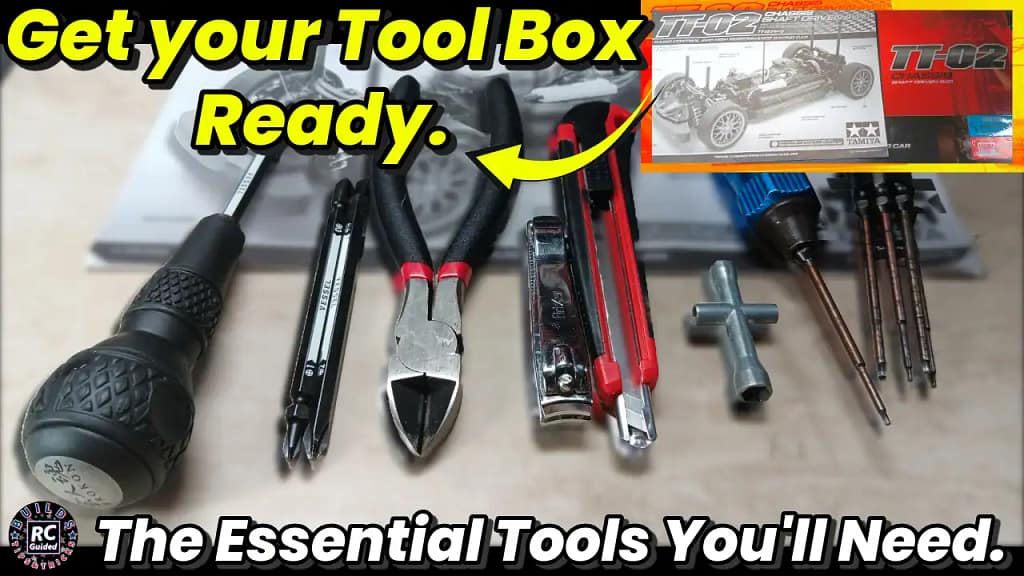
- Here is a list of highly recommended posts you should read on the subject that might give better insight than I.
- RCGroups Forum – Top 10 must-have tools
- RC Car Action – Newbie Guide: Building Your First RC Kit
1. JIS Screwdrivers (Sizes #1 & #2)
- Crucial for Tamiya kits: These use JIS (Japanese Industrial Standard) screws, not standard Phillips. A proper JIS screwdriver fits perfectly, preventing cam-out and preserving your screws.
- Recommended Sizes: You’ll primarily use #1 and #2 sizes throughout the TT-02 build.
- Tips & Tricks: You can sometimes cheat and fit a small flathead screwdriver that will fit even better than the recommended JIS size.
- Recommended Brands:
- Vessel (Highly Recommended): Praised for precision, durability, and exceptional grip. The one I use is Vessel Interchangeable Screwdriver 220w3j1, but if I had to do it again, I would get Vessel Torsion Bit with a 1/4″ Ratcheting Screwdriver
- Tamiya (Official & Reliable): Their tools are designed specifically for their kits, guaranteeing a perfect fit. The most popular model for your TT-02 is the Tamiya 300074085 RC Tool Kit.
- For a clear visual and explanation of the difference, see this guide from Chapman Manufacturing
2. My Secret Tip: Fingernail Clippers
- Highly useful for thin plastic parts: For trimming these from sprues, Fingernail Clippers offer surprising precision and control, often performing better and faster than a Hobby Knife with cleaner, quicker cuts on small nubs. They also work just as good as Side Cutters if the plastic isn’t too thick.
3. Plastic Nippers / Side Cutters
- Although I recommend Fingernail Clippers: These are often used for cleanly detaching plastic parts from their sprues (the plastic frames they come on). Using a hobby knife or twisting parts off by hand can cause stress marks, white deformation, or even break the part. Nippers provide a clean, precise cut.
- Important Note: Don’t confuse these with household wire cutters; plastic nippers have a flat, sharp edge designed specifically for plastic.
- Learn More: about proper plastic nipper technique from Gundam Planet’s tutorial
4. Hobby Knife / Craft Knife
- Essential for fine trimming: While nippers handle the initial rough cuts, a hobby knife is essential for finely trimming away any remaining nubs or mold lines from plastic parts, ensuring a flush fit and a clean finish. It’s also useful for opening product packaging.
- Safety Tip: Always cut away from yourself and use a cutting mat.
5. Nut Drivers (5.5mm & 7mm)
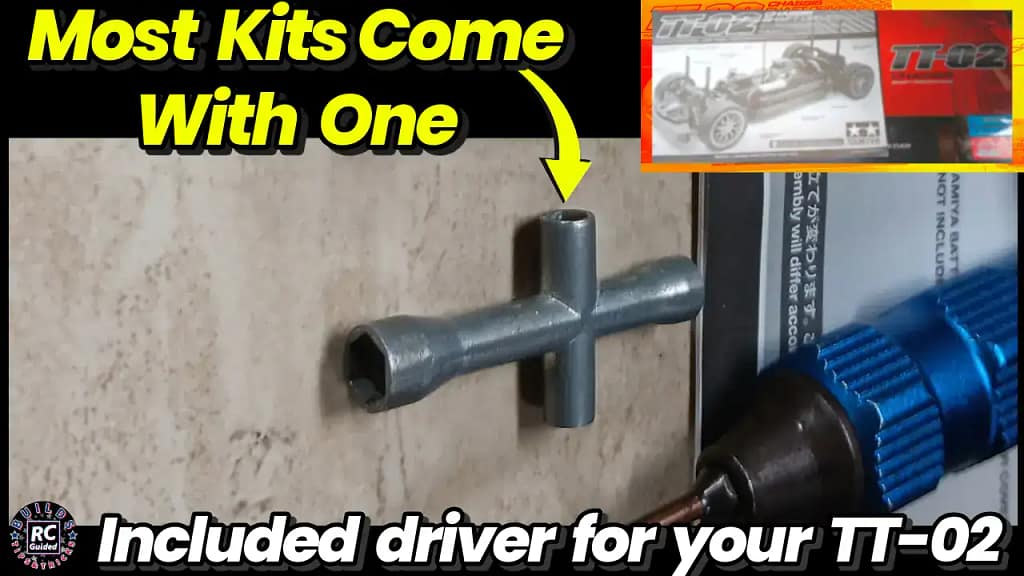
- Superior for tightening nuts: These specialized wrenches are far better than open-ended wrenches or pliers for tightening nuts, especially the wheel nuts (7mm) and other smaller nuts found on the chassis (often 5.5mm). They provide a secure grip, preventing rounding off the nut and ensuring proper torque.
- Recommended Sizes: The 7mm is vital for wheel nuts, and 5.5mm is common for other small nuts.
- Note: Most kits come with one
6. Hex Drivers / Allen Keys (1.5mm, 2.0mm, 2.5mm)
- Crucial for hex head screws: While the basic TT-02 kit primarily uses Phillips (JIS) screws, many hop-up parts, aftermarket components, or even some specific kit variations will incorporate hex head screws. Having the correct drivers prevents stripping.
- Common Sizes: 1.5mm, 2.0mm, and 2.5mm are the most frequently encountered hex screw sizes in RC.
- Note: The grub screw hex size for a TT-02 pinion gear is 1.5mm, I sure the kit come with one but most kits come with a cheap one that with strip out the screw (good luck getting it off if this happens.
- Recommendation: Unlike Nut Drivers, I would not cheap out too much on Hex Drivers if flush screws (like countersunk & grub) strip out you will, good luck drill the tiny screw out.
- Best Hex Driver: MIP is the Best, but a bit costly, I would go with MIP Metric Speed Tip. They are 1/4 drive bits, which makes them more diverse and cheaper to replace.
- Recommend Hex Driver: ProTek RC is what I would recommend for the value, and the set I would get for the value is ProTek RC Metric “TruTorque” Power Drill Tip. Just like the MIP Speed Tip, they are 1/4 drive, but you get more bits for a lower price and good quality.
- Tool Tips: On tool longevity, check out how to properly use and care for RC tools at RC Car Action.
II. Highly Recommended Tools for a Better Build & Experience
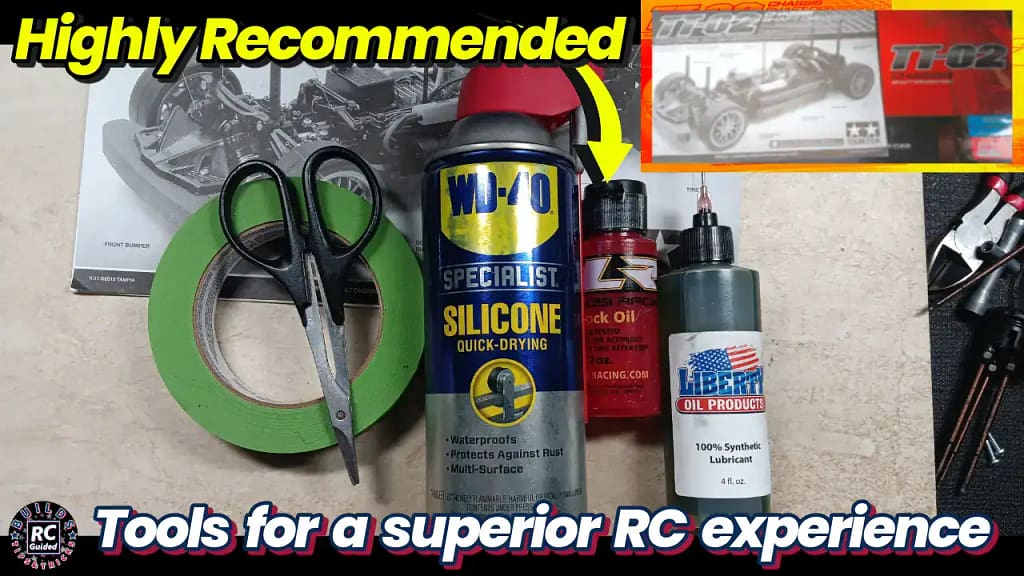
7. Lexan Scissors
- Essential for clean body cutting: The body shell of your TT-02 is made from polycarbonate (Lexan). Regular scissors will struggle and often result in jagged, uneven cuts. Lexan scissors, especially those with curved blades, are designed to glide through the material, giving you a smooth, professional-looking body.
- Note: You can usually get a Lexan Scissors & Body Reamer combo
8. Body Reamer
- For perfect holes in your body: After cutting out the body, you’ll need to make holes for the body posts, antenna, and potentially other accessories. A body reamer creates perfectly round, clean holes of various diameters without cracking or deforming the Lexan.
9. RC-Specific Grease (Silicone or PTFE-based)
- Key for drivetrain longevity and smoothness: Proper lubrication is crucial for your TT-02’s drivetrain. Apply grease to moving plastic-on-plastic parts, especially inside the gearboxes.
- Important Note: Use RC-specific grease. Avoid petroleum-based greases on plastics, as they can degrade certain types over time. Do NOT use this grease on metal ball bearings (use bearing oil for those, if needed).
- Recommend Lubricant: WD-40 Specialist Silicone Lubricant (or any quick drying Silicone Lubricant) will be the safest to use anywhere on your RC (like plastic and o-ring), but it’s not really grease. For higher loads, I would use Super Lube Synthetic Multi-Purpose Grease as it’s food-grade & PTFE-based, making it one of the safest Greases for you and your RC.
- Super Lube – Resources (FAQs/Technical Data): You can find more technical details on Super Lube’s resources page.
10. RC Shock Oil (Silicone)
- Needed for proper suspension damping: If your TT-02 kit includes CVA (Tamiya’s plastic oil-filled) dampers, or if you upgrade to aluminum shocks, you’ll need silicone shock oil. This oil provides a damping effect for your suspension. Different weights (measured in cSt or WT) affect how fast your shocks compress and rebound.
- Note: Most stock kits will not require shock oil
- Recommend Shock Oil: I always used Losi or Associated Shock Oil, but any silicone shock oil for RC should work
11. Light Machine Oil / Bearing Oil
- Reduces friction and wear: Regardless of whether your kit comes with bushings (plastic or brass) or any type of bearings, light machine oil or dedicated bearing oil will reduce friction and wear, making components spin more freely and last longer.
- Recommend bearing or bushing oil: Get Liberty Oil Synthetic – I think all the formulas are the same, but I would get the one that is listed as Bearings to play it safe.
12. Masking Tape
- Essential for clean body painting: For painting the inside of your Lexan body, masking tape is low-tack, adheres well, and peels off cleanly without lifting paint or leaving residue, which is crucial for achieving sharp paint lines.
- Note: You only need this on kits when you are painting more than one color.
13. Double-Sided Tape
- Crucial for mounting electronics: This is essential for securely mounting your electronic components like the Electronic Speed Controller (ESC) and receiver to the chassis. Choose a thin, strong RC-specific double-sided tape that can handle vibrations.
- Note: Most kits come with this already, but nice to have extra
- My Alternative: I use hook and loop adhesive (AKA VELCRO). This allows you more freedom to move components around on your car (or even to another car) more easily.
14. Small Parts Trays / Organizers
- Prevents lost parts and simplifies building: Your TT-02 kit will come with many bags of screws and small parts. Keeping them organized as you build prevents lost components and makes following the manual much easier. Simple multi-compartment trays or even small plastic cups work wonders.
- Tips: Don’t throw away the plastic containers that your food comes in. They are a free way to keep track of parts and screws when building your next kits. Also, Magnetic Part Trays are another great way of keeping track of small steel part like screws and pins.
III. Optional (but Highly Recommended for Future Upgrades & Maintenance)
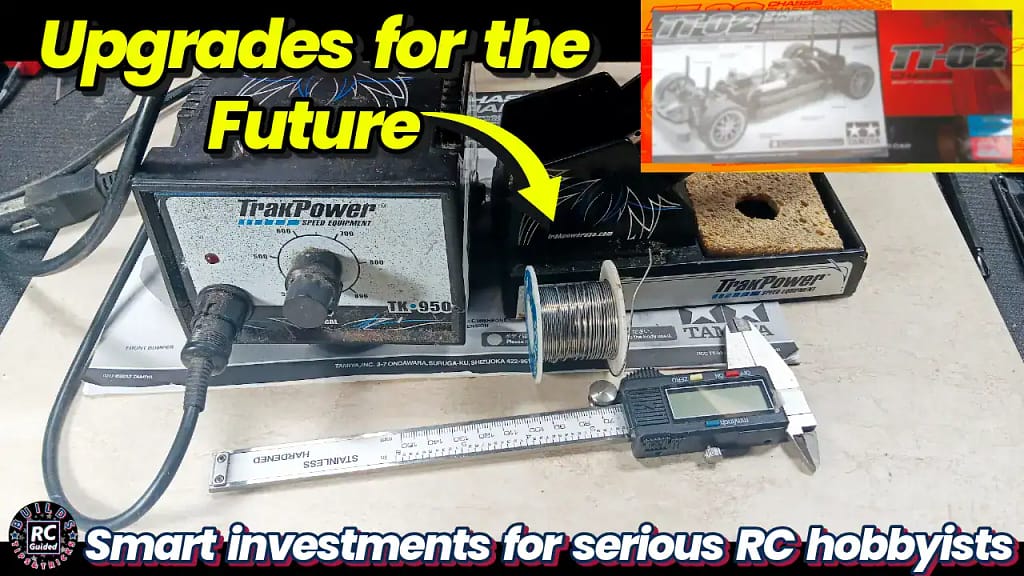
15. Soldering Iron & Solder
- Essential for electronics upgrades: If you plan to upgrade your motor/ESC, or if your chosen electronics don’t come pre-soldered with the correct connectors, you’ll need to solder. This is an invaluable skill for any serious RC hobbyist.
- What Soldering Iron should I get?: 40 watts or higher should get the job done. hard to go wrong with a Weller or a Hakko Soldering Iron. Also, the PINECIL – Smart Mini Portable Soldering Iron would make a great iron away from the house, for it can run on a battery.
- Recommended solder: Go for 63/37 Rosin Core Solder. This type of solder melts and solidifies at the same temperature, making it much easier to use. It significantly reduces the chance of creating a “cold joint” if you accidentally move the wire before the solder fully hardens.
16. Shock Pliers
- Simplifies shock assembly and disassembly: These specialized pliers make assembling and disassembling RC shock absorbers much easier and safer, preventing damage to the shock shafts or caps.
17. Digital Calipers
- For precise measurements and setup: These are useful for precise measurements when setting up your car (e.g., ride height, camber, toe), or verifying the dimensions of parts.
18. Threadlock (Blue or Low strength)
- Prevents screws from loosening due to vibration: For metal-to-metal screws that are subject to vibration (e.g., motor mount screws, suspension pivot points), Blue or Low strength prevents screws from backing out but still allows for removal. Consult your manual or upgrade instructions for specific areas where it’s recommended.
- For more information on threadlock types and uses, consult the Loctite (Henkel) official guide.
Common Questions (FAQ) or People Also Ask
- Why is a JIS screwdriver better than a Phillips for Tamiya kits?
- Tamiya uses JIS (Japanese Industrial Standard) screws. These are designed differently than Phillips screws, so using a JIS driver creates a perfect fit that’s less likely to strip or “cam out.” Phillips drivers often damage Tamiya’s screw heads, causing frustration.
- What size hex drivers or Allen keys do I need for RC builds?
- For most Tamiya and general RC builds, you’ll primarily use 1.5mm, 2.0mm, and 2.5mm metric hex drivers. These are crucial for hex-head screws and pinion gears, especially as you begin to incorporate upgrades.
- What are the most common mistakes beginners make when building a TT-02?
- Common pitfalls include using Phillips drivers and stripping screw heads, overtightening screws into plastic parts (leading to cracks), or misreading the step-by-step diagrams in the instruction manual. Taking your time and using the right tools can prevent most of these.
Level Up – Your Next Steps: Further Resources
- Don’t build alone:
- Reddit Thread: First time building a TT-02 kit. Any pitfalls I should be on the lookout for? – See what other builders recommend.
- TamiyaClub Forum: TT-02 Rally Build, what do I need? Suggestions? – A dedicated forum discussion with community wisdom.
- Reddit Thread: Every Tool Needed for an RC Build – A broader discussion on comprehensive RC toolkits.
Bottom line: The right tool today is fewer hassles—and more fun—tomorrow. Ready to start your build? Drop your first tool pick in the comments (on YouTube Video above). Let’s get building!
Your First Tamiya TT-02 RC Kit: Essential Tools & Tips for a Flawless Build 🛠️
Meta Description: Step-by-step expert guide to must-have tools, prep advice, safety tips, and maintenance know-how for building your Tamiya TT-02 RC kit confidently and successfully.
Building your first Tamiya TT-02 RC car is a thrilling journey 🚗💨, and having the right tools plus expert guidance ensures it’s fun, smooth, and frustration-free. This comprehensive guide covers everything you need to get started, stay organized, avoid mistakes, and maintain your kit for years.
📋 Quick-Start Build Checklist
Before opening the first parts bag, ensure you have:
- JIS screwdrivers (#1 & #2)
- Hex drivers (1.5mm, 2.0mm, 2.5mm)
- Fingernail clippers or plastic nippers ✂️
- Tire glue (CA glue)
- Hobby knife
- Moving parts lubricant & grease
- Small magnetic parts tray 🧲
Use this as your quick reference to gather what you need before diving in!
🏁 Pre-Build Preparation
- Organize Your Workspace: Use a flat, well-lit, clutter-free table.
- Sort Your Parts: Label and keep screws and parts in small containers or trays for easy access.
- Read the Manual Fully: Skim the instructions before starting; it helps avoid surprises and understand key steps.
- Charge Tools & Devices: Ready any electric screwdrivers or cameras if documenting your build.
- Inspect Kit Contents: Verify all parts, screws, gears, and body pieces are included and undamaged before building.
🛠️ Core Assembly Tools You Must Have
- JIS Screwdrivers (#1 & #2): Essential for Tamiya’s special JIS screws to avoid damage.
Vessel Interchangeable Screwdriver 220w3j1
Tamiya 300074085 RC Tool Kit
1/4″ Ratcheting Screwdriver + Vessel Torsion Bit - Hex Drivers (1.5mm, 2.0mm, 2.5mm): Necessary for pinion gears and future part upgrades.
MIP Metric Speed Tip
ProTek “TruTorque” Power Drill Tip
Traxxas Tool Kit
EcoPower Tool Kit - Fingernail Clippers / Nippers: Superior for clean cuts from sprues with minimal stress on parts.
Fingernail Clippers - Tire Glue (CA): Trust brands like Pro-Line, JConcepts, AKA, or ProTek to prevent tire failures.
💡 Ready to Build? Grab the essential tool set to start your TT-02 journey:
Vessel JIS Driver | MIP Speed Tip | Tire Glue
🧴 Oils, Greases & Threadlock for Smooth Operation
- Lubricant: WD-40 Specialist Silicone Lubricant is safe for plastic and metal parts.
- Grease: Use Super Lube Synthetic Multi-Purpose Grease on gearboxes and high-load points.
- Shock Oil: For damping, use Losi or Associated Shock Oils
- Bearing Oil: Liberty Oil Synthetic for quiet, smooth bearing operation.
- Threadlock: Prevent screws from loosening with Blue (Low Strength) Threadlock, especially on metal-to-metal fasteners.
✨ Check Price & Stock: Get your lubricant and fluids kit here:
WD-40 Silicone | Super Lube | Shock Oil Kit
📐 Smart Build & Finishing Tools to Boost Your Experience
- Magnetic Parts Tray to keep screws secure and organized.
- Soldering Iron options (Weller, Hakko, PINECIL Mini) for electronics and future upgrades. 🔋
- Digital Calipers ensure precise setup and tuning.
- Painting Supplies: Tamiya Polycarbonate Spray Paint, Masking Tape for sharp, professional finishes. 🎨
- Lexan Scissors & Body Reamer – Check Price for clean cuts and perfect holes on polycarbonate bodies.
🎯 Ready to Finish Like a Pro?
Grab these finishing essentials here:
Magnetic Tray | Calipers | Tamiya Paint
🔩 Optional but Highly Recommended Upgrades
- Nut drivers (5.5mm & 7mm) for secure nut tightening.
- Hobby knife for precision trimming.
- Bearing Replacement Kits (Fast Eddy, Yeah Racing) – Check Price for smoother and durable drivetrain.
- Shock pliers and small parts organizers to speed maintenance.
💡 Pro Tips & Common Mistakes
- Never overtighten plastic screws—“snug” is sufficient.
- Pre-thread screws into plastic before tightening to prevent splits.
- Test-fit parts before gluing or finalizing to avoid errors.
- Use labeled bags or containers to group hardware for each manual step.
Common Mistakes:
- Using Phillips drivers instead of JIS ones.
- Rushing assembly without organizing parts.
- Skipping threadlock where needed.
- Painting in dusty environments leading to poor finishes.
✅ First-Run Safety & Performance Checklist
Before the maiden run:
- Check all screws, nuts, and gear mesh are tight but not overtightened.
- Make sure wheels spin freely and the radio is properly bound and trimmed.
- Test steering for smooth, even travel.
- Start on a smooth surface at low speed to assess control.
🔧 Maintenance After Your First Drive
- Clean debris with a soft brush or compressed air.
- Recheck nuts, screws, and gear condition.
- Inspect shocks for leaks and smooth travel.
- Monitor electronics temperature and mount security.
🚀 Suggested Upgrade Path
Once comfortable:
- Install a full bearing kit (Fast Eddy, Yeah Racing) for durability and speed.
- Upgrade shocks to oil-filled versions.
- Add metal motor mounts and steel pinion gears.
- Switch to a brushless motor and ESC combo for power and efficiency.
❓ Frequently Asked Questions (FAQs)
Q: Why use JIS screwdrivers instead of Phillips?
Tamiya screws are designed for JIS drivers. Phillips drivers can strip and damage screw heads, leading to frustration.
Q: What hex driver sizes do I need?
Sizes 1.5mm, 2.0mm, and 2.5mm cover most screws and pinion gears.
Q: What are common beginner mistakes?
Using wrong drivers, overtightening screws, lack of organization, and poor painting conditions are typical pitfalls.
Q: What batteries and servos work well with TT-02?
2S LiPo batteries fit most builds; popular servos include Savox mid-range 35kg torque models. Check community forums for latest recommendations.
📸 Visual & Community Resources
- Step-by-step TT-02 YouTube Build Guide
- Active community at TamiyaClub TT-02 Forum
- Additional internal guides: Tamiya TT-02 Assembly Tips | RC Building Tools
Related posts:
 (7 Best) TT-02 Kits for Rally Racing or Buget Fun (find the right kit for you)
 Tamiya TT-02 Rally Upgrade Series
 Tamiya TT-02 Rally Guide (Notebook)
![[This Vs That] Tamiya TT-02 (2WD Celica GT-Four) vs Losi Mini-T Monster Herbie) Backyard Rally Battle](https://ml00z1v65wfl.i.optimole.com/w:120/h:120/q:mauto/rt:fill/g:ce/f:best/dpr:2/https://rcguided.com/wp-content/uploads/2025/10/This-Vs-That-Tamiya-TT-02-2WD-Celica-GT-Four-vs-Losi-Mini-T-Monster-Herbie-Backyard-Rally-Battle.webp) 2wd Tamiya TT-02 (Celica GT-Four) vs Losi Mini-T (Monster Herbie)
2wd Tamiya TT-02 (Celica GT-Four) vs Losi Mini-T (Monster Herbie)
 Tamiya Grasshopper Black Edition Build – Part 1 (Steps 1 to 20)
 1/8 Buggy Must-Have or Essential Tools
 Fix Your TT-02: Stripped Pinion & Spur & 68T High-Speed Set Upgrade Guide
 (TT-02) Set Perfect Gear Mesh with Stock Motor Plate⚙️
 MIP Gen 2 Tools
 How to Build a Ball Diff (The Right Way)